Wednesday, 22 April 2020

One-Man Slow Motion Zombie Apocalypse

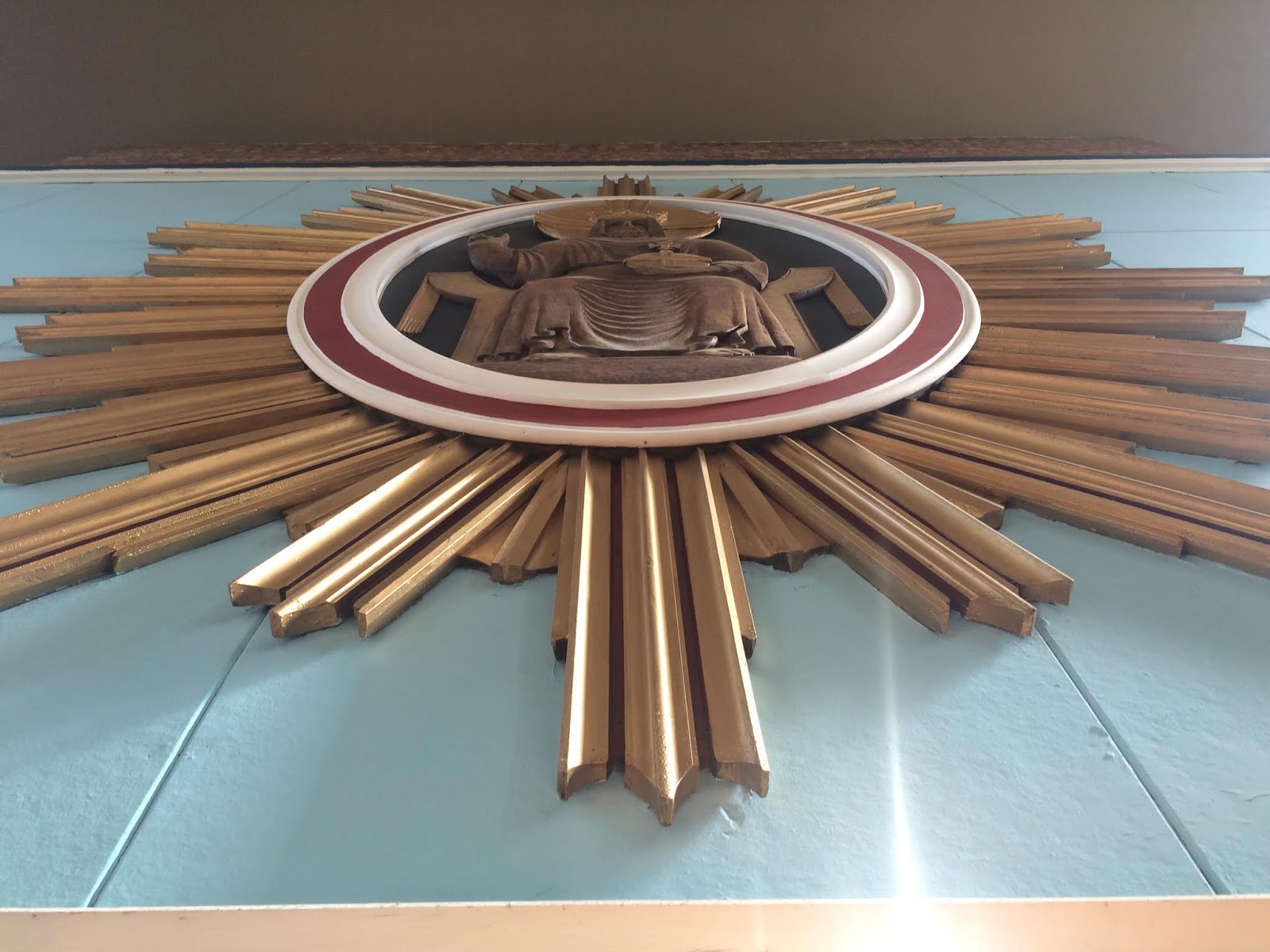
Hello again!  Yesterday on the Wythenshawe Team Facebook page I asked regular visitors to identify this clerical artefact:


As my acquaintance Victoria Coren Mitchell said, "Gee, that's a nut-scratcher."

Almost immediately three lovely people from the church I attend - Clare and Brenda and Lorraine - declared that it must be a clerical collar.  The white stretch of multiple-use plastic that clergy wear around their neck to signify service and open-ness to duty, joy and conversation.  One of these:


Lorraine and Brenda and Clare, you are unfortunately... wrong.  You have fallen into my heffalump trap.  The QI klaxons are sounding in your ears.  I must admit I misled you a little.  Would you like to see the bigger picture?

Ok.  Photographed in Manchester Piccadilly Station one Sunday when I was on a blind date, here it is:


The prize goes to Nicholas Campbell for correctly identifying the base of a coffee cup.  And not just just any coffee cup.  This is a Marks and Spencers coffee cup.  It's clerical because, you know, "More tea, vicar?"

Nice work, Nick.  I'll buy you a coffee (offer expires next Sunday).  Brenda and Clare and Lorraine, thank you so much for playing. If we weren't on lockdown you could call round and tell me what a naughty rotter I am.  Thank you so much, though, for putting yourself out there.  You rock.  Easter eggs all round!

Point being: it's difficult when you don't know the whole story.  It's tough when you can't see the bigger picture.

That's true with people too.  Last Thursday I found myself in Baguley Tesco (other stores are available, and other stores may actually have a phone signal) at the weekly NHS applause.  Tesco have stuck helpful arrows on the floors to indicate a one-way system (although they should have learned from their car park that Tesco customers are not brilliant at arrows.  Or parking.  Or the Highway Code.  Or not parking in disabled bays without a blue badge.  Or the parent and child spaces.  Anyway, I digress).  Basically, it's like Ikea now.  You have to visit everywhere to get anywhere and if you miss something then the loop back to find it is... well... loopy.  I only got Branston's pickle on the third attempt.

I was pottering down the soft drinks aisle in search of orange juice for smoothies when 8pm presented itself and the clapping began.  It was a little thin, but hey.  And while I was clapping, a little fellow of indeterminate age (about 78, I thought, with a tough paper round) came ambling towards me... not clapping... and walking against the prescribed direction of travel!  With a flagrant disregard of social distancing looming, and as an Englishman of the first water (ie I can't complain in restaurants), I kept on clapping and gave him the passive-aggressive Paddington Bear hard stare so beloved of this country.  And he kept coming.  It was like a one-man septuagenarian zombie apocalypse in slow motion.

My inner Basil Fawlty/David Mitchell hammered at my brain with a brilliantly cutting monologue that made it no further than my head (and about a dozen people I've regaled with the story, getting bigger every time).  "Hello? HELLO? I'm sorry, have you heard of social distancing?  Two metres?  There's a virus... it's been on the news.  Maybe you've heard of it?  And maybe you've seen these arrows on the floor?  I mean, did they not have arrows when you were a boy?  There's one on the Bayeux tapestry and that's from 1066 so I'm sure you must have seen one at some point.  Anyway, which end of this arrow do you not understand?  The blunt end or the pointy end?"


Me, left to my own devices.

Instead of which, of course, I waited until the end of the applause and then backed up so he could amble or shamble past and risk infecting himself or somebody else.  Like I say, a bit English.

But really, I've been in situations where you take people to task and they come back with some piece of information that I didn't have, and that bigger picture suddenly makes me ashamed of having spoken up, and I want the floor to open up and swallow me (in the direction of the arrow, obviously). So in Tesco I wondered whether he was partially sighted and couldn't see the arrows, or as pressured by the newfound difficulties of shopping as I feel, and declined to say anything.  He lurched on, actually lurched, in a way that made me think he was probably a war veteran fallen on harder times and some piece of shrapnel was lodged inside him from a battle where he'd saved countless lives and so he should be allowed to disregard arrows and keep-off-the-grass signs and jump the queue at the post office.

But yeah, in the absence of a bigger picture, I had a go at being charitable.  Because, in the words of a famous motto that somebody somewhere said:


The bigger picture helps.  As a vicar I sometimes get the terrible responsibility of taking someone to task, and the question I always ask myself (and should maybe ask them) is: "Why are you being so gosh-darned difficult?  Is there something I should know?"  After all, when I'm being awkward as all hell it's usually because I'm tired and feeling misunderstood and undervalued and some good deed has not gone unpunished.  Or gone awry.

You can think of a dozen, a hundred, a thousand things in anyone's backstory (or morning so far) that throw light on why they're behaving as they are, being difficult or demanding, demeaning or diminishing you, defiant or destructive.  They've been pooped on already today and they're unconsciously intent on pooping on the next person they see.  Illness or pain has taken away the insulation of the day.  They've been let down and aren't letting anyone else have another go.

What battle are you fighting?

What battles are the people who drive you up the wall fighting?

What battle is Mr Tesco-Customer fighting?  A soft answer to other people's bloody-minded difficulty doesn't just turn away wrath, it also opens up the chance to unpack things, and address the real troubles.  This man's real trouble wasn't that he was walking the wrong way.  There was more to it, and on a less fraught and more spacious occasion I might have engaged him in jocular conversation of the non-Mitchellian kind.

Jesus performs a wonderful little miracle in Mark 8:22-26 (read it!), healing a man of great visual impairment.  Pointedly, Jesus seems to take two attempts at it.  After his first pass, the formerly blind man claims that he can see people but they look like trees walking.

Trees, walking.  Yesterday.

Jesus makes a second pass and this time the man can see clearly now (the trees have gone!  He can see all obstacles in his way!).  But of course, Jesus being Jesus, he didn't need two attempts.  He's making a point to his disciples, who are having trouble seeing him clearly and what kind of Saviour and Messiah he is.  In particular Simon Peter has been making that half-right-half-wrong declaration where he spots that Jesus is the Messiah but then tries to stop him going to the cross.  Jesus is making the point that there is always further to go to see the bigger picture, and he both rejoices that Peter has seen so much but also tells him off for seeing so little.


I'm Peter.  I see some things but I'm completely blindsided by others.  I can have moments of insight (provided by the Spirit!) but also lengthy adventures in missing the point.  And I know that people have sometimes been harsh with me because they haven't stopped to wonder why I was being an asshat in a certain way on a certain day.

Man (and woman) traditionally passes on misery to man (and woman).  It deepens like a coastal shelf.  But instead of getting out as quickly as we can, we can try to understand other people's bigger pictures - not in a nosey way for our own knowledge but in a gentle way for greater understanding and kindness.  I need to keep going back to Jesus and asking him to help me see a bit more clearly, so that when I do finally take people side for a quiet word, it's a helpful one, not just about stopping them doing something wrong but all about getting to the root of it.  That way lies redemption rather than resentment, empathy instead of enmity.

If you get the chance, watch the brilliant film A Monster Calls.  It actually has a walking talking tree in it!  It's all about a boy who isn't ready for the bigger picture and who receives three visits from the Monster telling him three stories that he doesn't properly understand because he doesn't have all the backstories.  He keeps on jumping to conclusions until the moment he's ready to see the bigger picture, listen to the backstories... and that's when his healing begins.

A Monster Calls: possibly the best film in the world.

Lockdown gives many of us more chance to think about each other.  To wonder how other people in our family or congregation or whatever are doing.  What battles people fight and how they're exacerbated under lockdown - trying to be a "good" parent, struggling with one variety of autism or another in a world of broken routines, victims of domestic abuse, mental health troubles that are heightened by all this stress and uncertainty, guilt at not having to work while other people are putting in extra extra hours...

And if you can spot your battles, maybe talk to someone - friend, family, Jesus - about them so they make more sense.  The biggest bigger picture I need to understand is my own: what's pulling my strings, what's jerking my chain, what rattles my cage, what pushes my buttons.

That way, I may come out of lockdown kinder not just to anarchist anticlockwise shoppers, but also to myself.  And kindness is what will see us through these days.

Loving Lord Jesus, be kind to me and help me be kind to the people I love, the people I find it hardest to love, and to myself.  

Amen?


Sunday, 19 April 2020

What's Your Nickname?

Do you have a nickname?  Or did you have one years ago at school?  In my class at school we had a few guys with nicknames - and despite it being a mixed-sex school it seemed always to be the gentlemen who had nicknames.  Admittedly most of them were unimaginative: Webbo, Banksy, Jonesy and Shakey were just variations on surnames (yes, I went to school with Shakespeare).  But there were slightly (only very slightly) more interesting ones.  We had a Hilly Helmet (on account of his haircut), a Nelly (which is a short step from Neil), a Mugsy (I don't know how he felt about that, it was a bit Bash Street), a Taff (he was Welsh and that was probably racist), a Mammal (best not to ask) and the resident straight-A student in the class was called Prof.

And that was me.  So I got off pretty well in those days.  I was fairly sure some people were spelling it with two Fs but what can you do?  It's basically good to be remembered and named for something positive. 

 Donny Osmond modelling the Hilly Helmet look.

So pity the poor disciple Thomas.  He has a few lines in the gospels but his rise to prominence is largely on account of one of his less brilliant days.  Thomas isn't there when Jesus appears to the ten disciples in lockdown.  Maybe he's gone out for essential shopping or his hour's worth of exercise, twice round the Temple and back?  More realistically, maybe he doesn't grieve well with others and is elsewhere, nursing a private grief.  Either way, missing meeting his faithful friends turns out not so well for him.

When Thomas hears them all say that the risen Jesus Christ has stood among them, Thomas takes an understandable and sceptical line, which paraphrases well as, "You wishful-thinking hallucinators!"  So unless he can see Jesus and tangibly prove that this crucified man is alive again, "No way Jose!"  I respect that.  And I respect that a week later when he actually does come sheepishly face to face with the good shepherd, he follows his own logic and declares, "My Lord and my God!" and he worships.  Good man.

The Bible doesn't record that Thomas did stick his fingers in the wounds, 
but it makes for good art.

My perennial complaint on Thomas's behalf is that all this logical behaviour serves only to earn him a nickname that has stuck: Doubting Thomas.  History has a bit of a downer on the guy, and it's not fair.

He sticks with Jesus for three years when other people abandon him on account of tricky teaching.  But do they call him True Thomas?  They do not.

He asks the big questions about heaven and earth (John 14: read it!) and other people are glad that he did because they pave the way for Jesus' best sayings.  But do they call him Honest Thomas?  They do not.

He travels (we think) to India to spread the gospel (and possibly China and Indonesia) and he ends up martyred.  But do they call him Brave Thomas?  Well, in India, yes they do, but the rest of us?  We do not.

Thomas gets stuck with an undeserved nickname and an undeserved reputation, all off the back of one (actually quite sensible, sane and reasonable) moment.  

Imagine if your reputation and nickname came from a moment you'd rather forget?  Some of us would have x-rated nicknames.  Imagine if everyone harked back to your silliest moment, rather than your greatest day?  We wouldn't leave our houses!  (Yeah, okay...)

But it's human nature to recall the mistakes, and it's insecure human nature to throw them back at people.  When I first led Book of Common Prayer Holy Communion - in one of those tiny books with busy print and everything squashed together in one paragraph, I managed to miss out a line.  Everything else went well, but I missed out one line.  Everyone at St Chad's Bagnall shook my hand warmly as if they knew how nerve-racking it was, but one gentleman in tweed approached me, said, "You missed a line," and turned on his heel and went.  Ooh, thanks.  (But I bet that will be the one slip that he wishes never to be remembered...)

St Chad's Bagnall: an excellent congregation

I feel for our organists and guitarists and flautists in the Team, because you can play 999 right notes, but if you play just one duff note, which is it that people remember?

People do have a habit of rubbing it in.  If Thomas was fussed, then 2000 years of being called Doubting Thomas might get him down.

But Jesus?  Jesus never rubs it in.  He gently invites Thomas to stop doubting and believe.  He knows Thomas inside out and he knows why he has a hard time believing, and he's not about to rub it in.  He simply offers a way into belief, and Thomas leaps at it.  Done and dusted, forgiven (if indeed anything needs forgiving: I suspect not) and forgotten.  And Jesus looks at Thomas and sees the next set of good works that he's prepared in advance for him to do: first in Jerusalem, later in India.  Rock!

This is important to hear because in a world where we beat ourselves upon for our mistakes and where other people are ever-ready to remind us of how stupid we can be (in my case that is very stupid indeed), we need to hear that we're forgiven.  The whole point of the cross is that Jesus rubs it out: every mistake, every sin, every spiteful response of the past.  Jesus never rubs them in; Jesus always rubs them out.

Mistakes: rubbed out by Jesus.  Thank God for that!

You may need to hear that twice as loud this Easter because many of us are stuck (blessedly or otherwise) with family, and there's no-one like family to either lift you up or bring you down.  No-one like family who know you so well and can needle you so badly and remember your misdeeds and throw them back at you when tempers fray.  

So it's a good job that we also live with Jesus Christ.  It's a good job he's on lockdown with us, because he rubs it out and points us to what we can be rather than what we once were.  He calls us friends rather than sinners and he lifts us up to what we can be rather than dragging us down to where we might have fallen before.  Jesus rubs it out.  He never rubs it in.

We need that.  We need that because families sometimes prefer to see us as we were rather than imagine us how we can be.  The best family in the world can become a sitcom at the drop of a hat, in which Captain Mainwaring will never be other than a pompous twit, in which Inbetweener Jay will never be other than a vulgar boaster, in which Basil Fawlty will never learn.  But with Jesus in lockdown with us, there is the chance to change, offered to us by someone who knows what we can be and doesn't need to knock us down or drag us down.

There's a bit of me that will always be Prof (with one F).  But don't bother calling me that because it's really the past, and what we all will be... well, it has not yet been made known.  Human eye has not seen and human ear has not heard what God has prepared for those who love him...

This'll be my Jesus.

Let Jesus rub all that rubbish out, and make space for the glorious future that you have with him.


Saturday, 4 April 2020

My Browser History

Have you been clapping the NHS?  Stopping on a Thursday at 8pm and clapping and honking and cheering and letting off fireworks in support of our brilliant Health Service?  And will you hold the government to account as we move forward, so that the clapping isn't just a substitute for the funding that it needs?

Clapping the NHS got me into trouble, of course.  It was about 6.30 in the evening of the day of the first big round of applause, and - being me - I'd forgotten whether it was 7 or 8pm when I was meant to stand foursquare on the doorstep and put my hands together.  So I googled it.

My big mistake was in googling "NHS clap" because as well as discovering the true time, I also found myself with a number of images of the other meaning of the word clap... and that was more than I bargained for over my omelette.  Thanks for that, google.

And so, just like that fine woman in Stairway To Heaven, I was reminded that sometimes words have two meanings... and this is worth considering before you add to your browser history.

Anyway, I clapped.  And I'm still trying to get those other images out of my head.

Other words have more than one meaning... and some words have meanings that change over time.  In recent times we've often declared that something on the internet has "gone viral..." and that's less funny now.  I'll bet that's a phrase that's going to vanish quietly in these weeks.

Other things that might vanish include this:


Corona beer from Mexico is currently out of production because brewing isn't a necessary activity under Mexican law.  In days to come, will it return, or change its name?  Corona simply means crown, as in:

  • coronation
  • coronas of the sun
  • coroner (that's an officer of the Crown)
  • coronary arteries (they encircle the heart like a crown)

and every Friday when I was a boy we would have two bottles of Corona pop delivered by Mick the Co-Op milkman:


Way back, the Corona pop logo was seven old bottles arranged as a crown, thusly:


Anyway.  Mick would deliver two random bottles on a Friday alongside the six pint-bottles of milk jangling in the beige crate.  Imagine the excitement of rushing down to find which flavours he'd brought us!  One of them was usually lemonade: there were lots of home-made shandy drinkers round my way who enjoyed drinking something that tasted like the slops tray in the Red Lion.  But lemonade I always found a little bit vanilla... ironically because once Mick brought cream soda by mistake and that was waaaay too vanilla and sugary.  Can you imagine me being a bit hyperactive?  No, me neither.

Hang on, I may have digressed a bit...

Corona pops (which brilliantly grew out of the temperance movement in Wales in the 1890s) enjoyed huge success for a century and was bought first by Beecham's and then Britvic and disappeared as a brand in the 1990s, although the factory where it was first produced in Porth is now a recording studio and still called the Pop Factory.  How brilliant is that?

So, the Corona pop name being defunct, the owners are not presently scratching their heads in an office wondering whether and how to rebrand a drink that shares its name with a nasty virus.

In Mexico, however, they have a challenge on their hands.  And I'm sure other Corona products - we saw Corona tomatoes last week - are in a similar cleft stick/gum tree/creek.

Thankfully names and words can change their meanings and overtones.  When Dickens chose to call one of his most enduring characters Ebenezer Scrooge, it was a joke: Ebenezer means "stone of help" (It's in 1 Samuel 7 in the Old Testament part of the Bible) but from page 1 of A Christmas Carol this new Ebenezer is nothing of the sort.  He's likelier to stone you for taking half a day off and dock your coal allowance than to be anybody's stone of help.


So powerful is Dickens' story that we wouldn't now name a baby Ebenezer (which is Goode).  The name has completely changed its meaning and what it conjures up when we hear it.

Elsewhere, Jesus tells the story of a good Samaritan, and where previously the name Samaritan had meant people who sold out God and assimilated with the world, second-class cousins to God's holy people, 2000 years of telling that story have led Samaritan to become a compliment and in 1953 to the Revd Chad Varah founding the Samaritans.  The rehabilitation of the word was complete!


We live in a curious age where some people - and some politicians - and some newspapers will use words for ill, and particularly words like refugee and asylum seeker and immigrant have been tarred with a nasty brush.  The news that the first (hopefully the last) three doctors to be killed by Covid 19 were all immigrants to this country - two from Sudan and one of Pakistani origin - comes as a stern corrective to people who would demonise and spread hatred.  The news that the UK fruit and veg harvest is at a certain risk because of a lack of immigrant workers reminds us that we need the world.

Immigrant simply means that someone has taken the initiative to up sticks and move a good distance, sometimes to help, sometimes to look after family.  Refugee simply means that someone has fled an awful place or awful treatment.  Asylum seeker simply means that someone has looked to our land and judged it better and fairer than where they were.  I'll take that compliment on behalf of the nation.

If anything, in a time when there is more xenophobia and racism about that in much of living memory, we can seize these words of bravery, words of courage - words like immigrant and asylum seeker and refugee - and fly them up the flagpole with a touch of compassion and pride.  They should be words that imply effort and courage.  Have a go today.  Read some stuff about immigrants (not on the Daily Mail website thanks) and find out some famous immigrants from history who came here, saw things differently and gave their all for their adopted home.  Start with:

Isambard Kingdom Brunel
George Frederic Handel
Sigmund Freud
Michael Marks (and Spencer)
Alex Issigonis (designer of the Mini)
Rita Ora (from Kosovo as a baby)
Wyclef Jean (refugee from Haiti)
Omid Djalili
Albert Einstein
Jesus

and now - having fought to the end to defeat coronavirus, those three doctors:

Adil El Tayar
Amged El-Harwani
Habib Zaidi


Use this crisis and your time and conversation so that we emerge into a world where demonising immigrants and legitimating racism are both unacceptable, and where meeting someone from somewhere else in the world inspires in us curiosity and admiration at how far they've travelled and how much they've risked to look after family... or what they've endured and escaped.

If Jesus and Dickens can change words, so can we!


Sunday, 29 March 2020

Why Can't The English...

Would you like to hear about some exciting things I have seen as a key worker this week?  They may cast some light on the English.

One exciting part of my job while the lockdown continues is delivering food parcels.  Both the Bread and Butter Thing and the Wythenshawe Food Bank are still running, exercising every care and much social distancing to provide the poorest families and people with enough to get by on.

A dramatic reconstruction 

So I set out on my bike for a delivery or two yesterday, and the trip into Baguley confirmed some of my deepest suspicions about the English.  Chiefly that we don't wish to be found.  English house numbers are perhaps the sparsest and smallest and hardest-to-find numbers in the world.  Cycling down a street trying to stay balanced and to catch a glimpse of a house number is quite a feat.  House numbers in this country are very often camouflaged by being the same colour as the door.  Or they're very small indeed.  Or they're simply not present.  

Well-lit.  Clear.  Please.

The other hassle is that you need two house numbers.  Even when I've figured out which side of the street is odd and which is even (there are loose postal rules), spotting number 87 when I'm looking for number 189 won't tell me whether I'm going in the right direction, just that I'm 51 houses adrift of my target.  It can be ten or twenty houses in either direction before I realise that the numbers are going down instead of up.

When I find the right house, the next exciting task is to unfasten the gate.  Baguley was reasonably straightforward on this count, but in my time delivering flyers and food I have been baffled by bungee ropes and karabiners, not to mention the endless varieties of rusty pull-bolts and drop-bolts and push-bolts.  It can take a boy a while to unlock these Crystal Maze-style defences.

Please let me in your front gate...

And then there are the letterboxes.  Don't get me started.  Letterboxes should be for the ease and convenience of the postal delivery worker.  You only have a letterbox to receive goods and messages, so why would you deliberately instal one with spring-loaded teeth, or that was so narrow and tight it's like feeding a coloscopy camera up a patient?  Why would you have one so low down that we have to crouch to deliver?  Or a letterbox that creases and shreds with such resistance that I might as well not have kept things pristine en route?

This would be nice.

Maybe, on top of not wanting to be found, we don't actually want people giving us things either?

Anyway, I only broke one letterbox, but it was probably already broken and I didn't feel I could socially distance myself and apologise at the same time (but I will one day return).  And on my way home I realised that there were some numbers writ large that might guide me to houses...

...except they were written on bins.  Or they were huge stickers, firmly and proprietorially adhered to wheelie bins.  And the message of the huge numbers was clear: "Don't steal my bin.  Just don't flippin' dare.  Don't even think of it.  Get your thieving hands off my wheelie bin.  That means you!"

Probably don't steal these...

What a curious nation.  Hiding our houses but being properly jealous (in the correct etymological way) of our bins.  What does it say?  Who are we, sticking 42 out of sight on our front doors but two feet high on a bin?

What do you think?  Gotta love the English. 

But the other thing I noticed as I cycled (and recycled when the numbers went the wrong way) was the number of rainbows in windows, drawn by children (or childlike adults) to encourage others.  Some observed the strict order of the visible spectrum (well done), others felt obliged to differentiate between indigo and violet (don't get me started: this is Isaac Newton's misconception that there should be seven colours in the rainbow when patently there are only six!) and I've heard of one young man who stuck religiously to the song and coloured in red and yellow and pink and green... 


Somewhere amid hiding our houses and guarding our bins, we encourage each other.  We - ironically - deliver.  We stand on our balconies and doorsteps clapping.  We blu-tac rainbows in solidarity.

I love the human race.  We can stockpile bog roll and cut people up on the road, but we can fill trolleys for food banks and we can flash our headlights to say, "No, you go."  We can close our doors and we can throw open our arms (and keep safe distancing).  Being driven apart might lead us closer together...

What effect do you think all this will have on the human race?  Will we change for good?  Will we snap back to how we were?  How can we strive to see good emerge from all this tragedy and all this loss of life?  And what does God make of us - the English or the whole human race?

Thursday, 26 March 2020

Why Does My Heart Feel So Bad?

The answer to Today's Big Question Of Life is 42.  Psalm 42.  Now we only need to figure out the question.

When I say Psalm 42, I also mean Psalm 43.  The two of them come together and were probably one big Psalm in the original hymnbook we call Psalms.  Have a read of them (go on) and you'll see that the chorus - at 42:5 and 42:11 and 43:5 is:

Why, my soul, are you downcast?
    Why so disturbed within me?

It's a song about someone talking to their soul.  Or their heart.  Or themselves.  And asking that question - Today's Big Question Of Life - "Why so downcast?  Why so disturbed?"


If anyone asks me today why I'm a little bit anxious, more than a little bit unsettled and really quite antsy, I'd raise my eyebrows and wonder if they'd missed all the news for the last months about this flippin' coronavirus.  That's why I'm a little bit anxious.  Friends and family far away, more than a bit isolated and not exactly sure what tomorrow will bring.

And that's why Psalms 42 and 43 are two of my favourites.  They show us someone asking themself, why so unhappy? why so downcast?  And asking the question leads them to identify the problems, which they can then go a certain distance to addressing.  Once they've outlined the reasons for their unease, they come to the conclusion that they will put their hope in God, and praise him in spite of everything, for being their Saviour and their God, even though they haven't spotted much blessing in the recent past.  There's a modern equivalent when Moby sings that old gospel track Why Does My Heart Feel So Bad?


Psalms 42 and 43 encourage me to self-diagnose my spiritual malaise, or, in proper terms, spot what's bugging me.  

All of us are assailed at present by a clinging uncertainty and anxiety, at least a wisp of fear, alongside missing the people we can't be with and quite often feeling powerless to do very much about any of it.

The first step to dealing with it a little is to spot it and acknowledge it.  "Why so downcast, O my soul?"  Then we can go on in the sight of God to say exactly why, and to separate out the half-dozen things that are eating us.  Naming them might cut them down to size.  Naming them might mean that I have six smaller problems to address rather than one massive mess of alarm.  I can make steps with six problems where I'd be paralysed looking to deal with one mahoosive tangled ball of troubles.

Some of my big/small troubles

Getting through all our lockdowns and isolations and separations will be easier if we can stop regularly - mindfully if you like - and take a leaf out of Psalm 42 (and 43!) and talk to ourselves.  That way we won't be so tetchy with the children we're home-schooling or fractious and brittle with our partner, and those of us alone in a strange month won't be overwhelmed by a tidal wave of mixed emotions.


It's good for others too, to ask them at the right time how they feel and whether they can unpack the layers of things that contribute to the downcast-ness.  Children need some space to say how they feel, even if it's just a smiley face and a sad face - and then you can start to imagine with them what would help - quiet times or a hug or a story or an hour when they can snuggle in a rug.

And don't be afraid to air all the little things before God if they're getting you down.  I'm sure many ears are on the verge of needing a good syringe, but that's not going to happen.  And thinking that makes me feel guilty because that's such a first world problem, but I can 'fess up to God about that too. 


 Finally, right at the heart of the 16 verses that make up these Psalms is Psalm 42:8 which says, simply:

By day the Lord directs his love,
    at night his song is with me –
    a prayer to the God of my life.

Right at the heart is a reminder that God is here day and night in prayer and song (sad songs and silly songs included).  So whether you're sleeping badly, sleeping in because you can't quite face the world, sleeping odd hours or not sleeping at all, we can stabilise ourselves for tomorrow by having this brilliant honest conversation with ourselves.  Our heart.  Our soul.  Whatever.


And we can know that whatever our sleeping habits and patterns, whatever ails us, whatever is actually adding to the weight of things that bug us, there's a God who never slumbers nor sleeps.

But that's a whole different psalm...


Tuesday, 24 March 2020

The Seat Of My Pants, Literally

So today I found this on the seat of my pants:


It's a tiny little cross and the letter g.  I've been wearing these for ages and never noticed that my derriere was advocating Christianity.  You on the other hand may have spotted it weeks ago... in which case, stop ogling!

In the same way that I've never seen the back of my own head except when my barber Alan shows me (and I'm a bit shruggy on those occasions because haircuts are about feeling comfortable underneath them, not impressing anyone else), I've never actually taken notice of the seat of my pants.

I finally noticed it because I had a bit longer to get dressed today - less deadlines, even if there are more people to stay in touch with.

And it threw my mind back to Sunday, when St Luke's was open for the last time for quite a while.  It was an odd feeling.  Half a dozen people came in to pray, and when everyone had gone, I took out my phone and took some photos.

Here, then, to tide us over until we can reopen, are some of my pictures of St Luke's.


St Luke's is a great space, and from my perspective it's always full of deadlines and pressures: is the organist here?  do we have a reader?  have I sorted the sound system?  is the baptism water the right temperature?  have I remembered all the notices?  is the collect bookmarked?

On Sunday it wasn't rushed or pressured.  Everyone went home and I started exploring it from other perspectives: sunlight on the parquet, a fly on a pew, daylight turning the sanctuary light into a gyroscope of brilliant curves of chromatic colour.  Jesus from below, and best of all the underside of the pews.  What a space!  What alternative viewpoints had I missed by being a busy vicar!


Even dust is sensational.

That brings me back to our present circumstances, locked down to help preserve the vulnerable.  It's a noble task, staying in (unless you're a key worker, in which case it's a noble task, going out).  So far I'm feeling it as an anxious event but with sunshine and neighbours I can wave to (hello Betty!).  It has something of the Sabbath about it - that's less good when you're not being paid for anything.

It has the possibilities of cabin fever and climbing the walls, or simple loneliness.

But if a close examination of my trousers and a fresh exploration of church have taught me anything, it's that there are new ways to see even the most familiar.  There are simple things to love, simple things that I've been waaaaaay too busy to notice.  Sunlight through bedroom curtains, trees and birds, beads of water on the glass in the shower, the way the sinews in my forearm play below the skin, the movement of clouds and - at some point - the thrumming of mighty rain on our window panes.


Beautiful.

Basically, have a go at looking at things differently.  This whole lockdown thing is - let's admit it - a mighty faff and a lot of worry about loved ones and huge concern about the lives of the self-employed.  Let's never diminish that.  It's also a bit of a blow for those of us whose mental health isn't the pinnacle of perfection.  

But God still works in all things, and if he works in all those motes of dust in a ray of sunlight, or in the clouds over the moon, or tonight's sunset (looking good), in marvelling at things we've seen a thousand times but never really seen properly, then he can see us through this curious Sabbath (curious seven-day week) with reasonable mental health and eyes opened to new things.


Hamlet, suitably amazed by life.

Hamlet (indecisive Dane) declared that he "could be bounded in a nutshell and yet count himself a king of infinite space" - and okay, that was the Bard of Shakespeare (or something).  But God made this world more beautiful, more intricate than we can ever guess, and one thing we can do is to find wonder in everything, and also in closing our eyes and letting the invisible God show us things about him/herself that we hadn't had time to spot.

So hold on.  And expect new insights as you ask God to brighten and amaze you every day...

Saturday, 21 March 2020

Paul and Pilates

Question: what does the apostle Paul have in common with Pilates?


Me, doing pilates.

Pilates was invented and refined by Joseph Pilates, a German gentleman who moved to England only to be interned by the authorities during the Great War.  He was imprisoned variously at Lancaster Prison - the castle - and later at Knockaloe on the Isle of Man.

He was already a wrestler and fascinated by fitness and yoga and how to stop people slouching.  In Lancaster Prison, in a very confined space, he was intent on not losing his physique or agility, and so in the tiny space of his cell he developed exercises to remain supple and lithe.  No equipment, no gym, no wide open space, and yet he prospered and introduced Pilates to the world.  

Not many people these days realise that Pilates is a German surname, but there you go.  Joseph Pilates did some of his best work in a very confined space.

And so did Paul the apostle.  When he was done tramping across Asia and being rioted at and caused of all sorts (go and read Acts 13-20 now!) he spent a long time in prison himself.  And it was there that Paul wrote a good portion of the New Testament.  Under close arrest, he would appear to have written those four stomping letters: Ephesians, Galatians, Colossians and Philemon.

Have you read them?  
  • Ephesians - where Paul lets his theology fly and gives us that stunning image of the armour of God.
  • Galatians - where his passion about the new life of Christians leads him to name nine fruits of the Spirit.
  • Colossians - where he reminds us that Jesus Christ is the visible image of the invisible Father God and invites us to put on Christ like a cloak.
  • Philemon - a short letter where he imitates Jesus by paying the price for a saved lost soul, and invites one man beyond his comfort zone.
To be fair, they're more exciting than that middle portion of Acts (which is riveting enough in itself).


Like Pilates, Paul created some of his best stuff behind bars, under house arrest, stuck inside.

Can you see where this is going?

I don't know how much social distancing you're doing just now.  I don't know whether you're effectively on lockdown, and I don't know whether or when I will be either.  There is a sense of horizons narrowing and possibilities diminishing.  I won't pretend it's not challenging.  I was stuck at home with post-viral fatigue and a month of rain after Christmas, and I can get very down about that.  

But there are possibilities.  While Paul wasn't in prison he declared that "God works in all things for the good of those who love him."  So when he found himself stuck within four walls, he must have had listless days, but he basically knuckled down to making sure those days weren't wasted.  He mined and thought until he figured out how God wanted him to use his days when he couldn't do exactly what he wanted.  And we trust that God moved him to write, and we have those words here to keep us faithful in our straitened times:

"Praise be to the God and Father of our Lord Jesus Christ, 
who has blessed us in the heavenly realm 
with every spiritual blessing in Christ!" 
- Ephesians 1:3, written behind bars...

"It is for freedom that Christ has set us free.  
Stand firm, then, and do not let yourselves 
be burdened by a yoke of slavery." 
- Galatians 5:1, written when Paul seemed anything but free...

"I am confident of this, 
that God who began a good work in you 
will carry it on to completion 
until the day of Jesus Christ." 
- Colossians 1:6, even though he knew he would probably never see these people again...

"I pray that you may be active in sharing your faith, 
so that you will have a full understanding 
of every good thing we have in Christ." 
- Philemon 6, still under guard.

Times aren't always what they seem.  God works in even the hardest days to grow us.  Nothing is wasted in God's wise wise economy.  He may not have sent coronavirus our way, but he will make sure that some great good comes out of it.

So what might we - you - do while we are on lockdown? This is the best opportunity in a generation to learn to pray, to try something new from our armchairs, to open up the Bible and make some progress through it.  My friend is learning to play the trumpet while his schooling is off.  More spiritual pastimes are available.

God help his mother.

Other people have written Don Quixote, De Profundis, Pilgrim's Progress, One Day In The Life Of Ivan Denisovich and Orange Is The New Black, all while deprived of the liberties and horizons they had previously enjoyed.

So yes.  Pick up a pen or turn off Tipping Point and write a poem.  Try pilates.  Find a new way to pray so that when coronavirus restrictions are lifted, we don't just go back to how we were but instead emerge with something new to show for it: a novel or a newfound passion for Ignatian prayer...

God cannot be limited, and God will not see time wasted.  Shall we join him in doing something new?